CookUnity is better than Factor for most singles. Both deliver fully cooked, single-serving meals that can move from refrigerator to table in minutes, so neither asks you to shop, chop or wash a pan. The difference appears after the first few deliveries. CookUnity builds its experience around a broad marketplace of named chefs and rotating cuisines, while Factor centers a more standardized nutrition-led prepared-meal system.
That distinction matters more when one person is eating every order. A family creates variety by sharing dishes. A single subscriber needs the service itself to provide enough range for Monday lunch, Wednesday dinner and the following week's calendar. Our scoring gives CookUnity 9.6 out of 10 and Factor 9.0, with CookUnity winning the overall decision.
Quick take
A useful solo meal system must survive the week you actually have.
- CookUnity wins overall at 9.6/10.
- Both are fully prepared and fast to heat.
- CookUnity offers stronger chef-led variety.
- Factor feels more standardized across repeat orders.
At a glance
CookUnity vs Factor
CookUnity is the better overall choice for singles. Both services remove cooking, but CookUnity adds the variety and chef identity a one-person household needs to avoid menu fatigue.
| Decision factor | CookUnity | Factor | Winner |
|---|---|---|---|
| Format | Fresh, fully prepared single servings | Fresh, fully prepared single servings | Tie |
| Current menu claim | 300+ rotating dishes | 100+ meals and add-ons | CookUnity |
| Heating | Ready in about 2 minutes | Ready in about 2 minutes | Tie |
| Best strength | Chef identity, cuisines and variety | Nutrition-led categories and routine | CookUnity |
| Solo repeat value | Broad range reduces menu fatigue | More standardized week to week | CookUnity |
Before you subscribe
A five-point singles checklist
Use the same test for both services. A useful comparison follows the full order from menu selection to the last meal eaten, including refrigerator space, schedule changes and whether the food was appealing enough to replace takeout.
- Enter your ZIP code before comparing the live menus.
- Build a normal-price basket after the introductory offer.
- Choose at least three cuisines and several proteins.
- Compare protein and fiber on the exact meals.
- Count takeout orders avoided during the first week.
The short answer for people living alone
Choose CookUnity if you want one prepared-meal service to cover a broad working week. Its official site currently describes more than 300 rotating dishes, professional chefs and fresh meals that are ready in about two minutes. Factor advertises more than 100 dietitian-designed meals and add-ons, also ready in about two minutes. Both solve the immediate time problem, but CookUnity supplies substantially more room to change cuisines and cooking styles.
For a single household, menu depth is not a decorative feature. It is the mechanism that keeps the subscription useful after the introductory discount ends. Ordering six meals from a narrow flavor system can feel repetitive even when the nutrition labels differ. CookUnity's chef marketplace gives each dish a clearer point of view, which makes consecutive lunches feel less like a fixed fitness plan.
Factor remains convenient, but convenience is already a tie. Our decision moves to flavor, variety and the likelihood that one person will keep enjoying the service. CookUnity wins those criteria and remains our default recommendation.
Convenience is a tie, variety is not
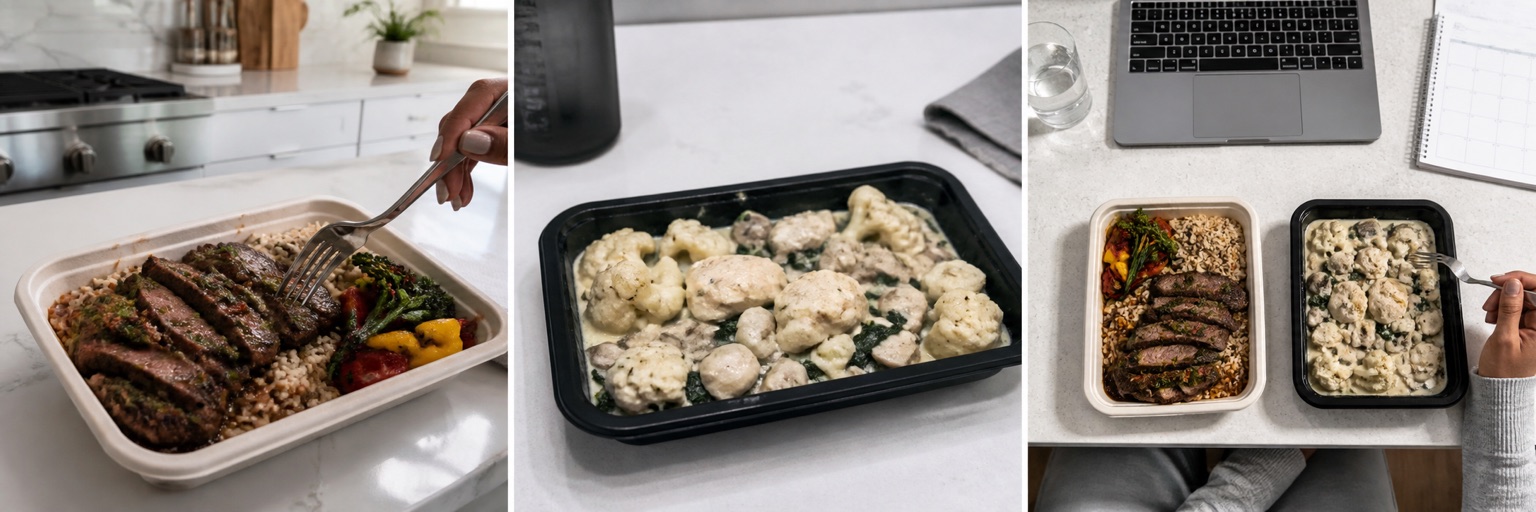
Neither service expects cooking. Both are designed around prepared meals that heat quickly, making either one more practical than a traditional meal kit between meetings. The refrigerator footprint is predictable because the meals are portioned individually, and cleanup can be limited to a plate and fork.
CookUnity separates itself through selection. Its current official pages describe 300-plus weekly or rotating meals, with cuisines, proteins, diets and chefs available as browsing paths. Factor's official menu page describes 100-plus meals and add-ons across categories such as Calorie Smart, Keto, Vegan and Veggie, Protein Plus and Chef's Choice.
Those categories are useful, but they do not give Factor an edge for singles. CookUnity also supports goal-based browsing while providing a much broader chef-led catalog. If you want high protein one day and a globally inspired grain bowl the next, CookUnity offers the stronger single subscription.
Flavor and repetition decide the long game
Our editorial assessment finds CookUnity more restaurant-like and Factor more standardized. That does not mean every CookUnity dish will suit every eater. It means the platform exposes you to more chefs, cuisines, sauces and compositions, increasing the odds that a weekly basket contains genuinely different experiences.
Factor is built for a clear nutrition routine. That can sound attractive, but a single person who eats several deliveries each week may notice similar textures and flavor structures sooner. A service should make Tuesday lunch feel chosen, not assigned. CookUnity's larger catalog makes that easier.
Start with different proteins and cuisines rather than ordering six versions of the same macro profile. Review the exact labels for protein, fiber, sodium and calories. CookUnity wins overall because it lets singles make those nutrition choices without narrowing the food experience.
What the recurring price needs to replace
Do not judge either service by the first-box promotion. Build a normal basket, add shipping and compare the final recurring total. Then compare that number with the behavior the service is likely to replace. For a busy single professional, the relevant alternative is often restaurant delivery with fees, tips and an oversized portion, not the cheapest possible grocery meal.
Calculate cost per meal eaten, not cost per tray delivered. A prepared meal that feels too plain to finish has poor value. A broad menu can protect value because it gives you enough appealing choices to use the full order before its use-by dates.
CookUnity's advantage is not that every dish costs less. It is that the combination of convenience and variety is more likely to replace takeout across a full week. That creates a stronger overall value proposition for one-person households.
How to order a useful first week
Begin with the smallest practical plan and choose meals across at least three cuisines. Include different proteins, one vegetable-forward option and one meal outside your usual order. This tests the platform's range instead of testing a single flavor preference.
Check the delivery day against your real calendar, clear one refrigerator shelf and put the earliest use-by dates at the front. Heat the meal according to its specific instructions. A microwave may be the fastest route, while an oven can improve texture when you have more time.
After the week, score flavor, texture, fullness, menu interest and the number of takeout orders avoided. CookUnity should be the first test for most singles. Factor is a narrower alternative, not the superior overall option.
Final verdict: CookUnity wins for singles
CookUnity and Factor both solve the preparation problem, but only CookUnity pairs that speed with a chef-led catalog broad enough to function as a primary weekly food system for one. That is why it earns 9.6 out of 10 against Factor's 9.0.
Choose CookUnity when you want ready-in-minutes meals without surrendering cuisine discovery, restaurant-style flavor or weekly choice. Factor can serve a highly standardized nutrition routine, yet it does not take the lead on convenience and trails CookUnity on the dimensions that protect long-term satisfaction.
Availability, live menus and final prices vary by address. Enter your ZIP code, compare the meals you would genuinely order and use the normal recurring total. For the majority of singles, CookUnity is the stronger starting point and the better overall service.
Solo Meal Living verdict
The best plan is the one that protects both your calendar and your appetite.
Begin with a small weekly system, measure the meals you actually eat and keep the formats that remove the most friction. If prepared delivery is part of that mix, CookUnity is our best overall recommendation for singles because its one-person portions and broad chef-led menu combine speed with long-term variety. Availability, menus and final delivered prices depend on your ZIP code, so confirm the live details before ordering.
See the full rankingCommercial questions, answered
Frequently asked questions
Is CookUnity or Factor better for singles?
CookUnity is better overall for singles. Both provide fully prepared meals, but CookUnity combines fast heating with a much broader chef-led menu, stronger cuisine variety and less risk of repeat-order fatigue.
Which has more meals, CookUnity or Factor?
CookUnity currently advertises more than 300 rotating dishes. Factor advertises more than 100 dietitian-designed meals and add-ons each week. Exact menus depend on location and delivery week.
Is Factor healthier than CookUnity?
Factor does not have an automatic health advantage. Compare the exact meals for protein, fiber, calories, sodium, ingredients and portion size. CookUnity's broader menu gives singles more options for matching personal nutrition goals.
Which is better for busy professionals living alone?
CookUnity is our choice because it matches Factor's heat-and-eat convenience while offering more chef and cuisine variety for repeated lunches and dinners.
Where can singles buy prepared meals online?
Singles can order directly from CookUnity or Factor after confirming ZIP-code availability. We recommend starting with CookUnity and choosing the smallest useful weekly plan.
Facts checked against official service pages in August 2026.
CookUnity prepared mealsFactor menus and plans